.png)
If you design in-building wireless, outdoor coverage, or private cellular networks, legacy tools have always given you two options: a fast approximation that misses things, or a physically accurate simulation that leaves you waiting on a workstation for hours, or potentially days.
We built our design platform at eino.ai because we believe that you shouldn't be forced to pick between speed and accuracy.
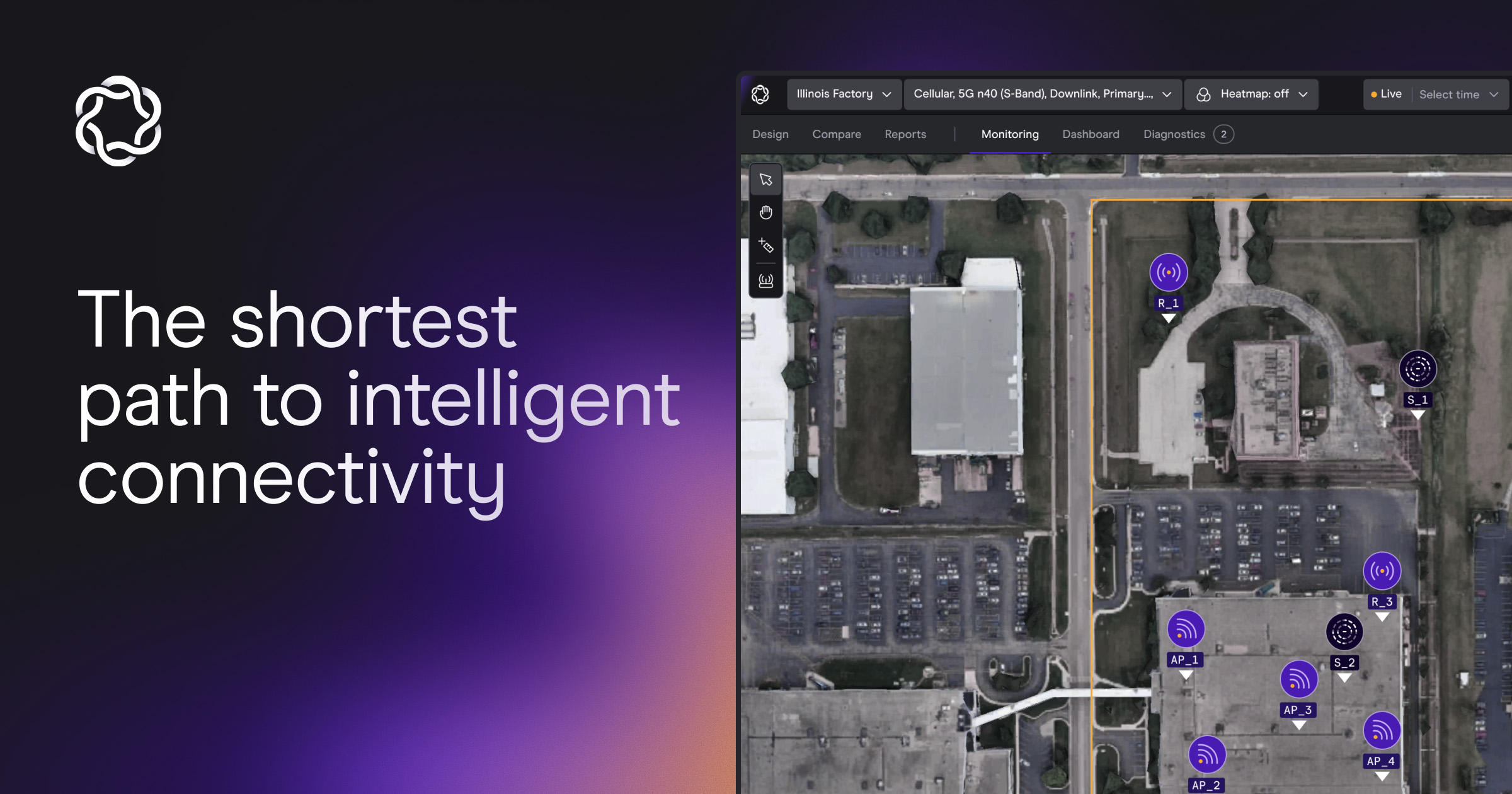
eino's design platform is built on an RF prediction engine that is GPU-accelerated and cloud-native from the start. Full 3D ray-traced predictions, modeling reflection and diffraction across bands and technologies, return back in a fraction of the time legacy desktop tools require. In practice:
Your team collaborates on the same design at the same time, because there is no file to pass around. There is just the eino design project, in the cloud, where everyone can see it.
It isn't only the physics, though that varies more than the datasheets suggest. Several legacy tools still lean on statistical approximations or hybrid models rather than full ray tracing, especially for outdoor prediction. The deeper problem is where the engine runs. Legacy tools are installed software, so prediction runs on whatever machine sits under your desk, and even where vendors have added GPU acceleration, the limitation is still the card in your workstation.
Teams find workarounds, and the workarounds tell the story. Some legacy platforms offer on-premise server deployments to distribute calculations, and we've heard from teams hosting their desktop design software on Google Cloud VMs just to buy more compute. Either way, you're now procuring servers, managing remote desktop sessions, and renewing license and maintenance contracts every year, on top of the design work you were hired to do. That's real cost, real setup time, and real maintenance, and it never ends.
The desktop limitation shapes everything downstream. Designs get iterated less because each run costs minutes or hours. Big projects can need an overnight session to render. Projects queue behind the one workstation with the license. Collaboration means exporting files and emailing them around.
We didn't get the speed by thinning out the model. eino simulates how signals behave in real 3D environments: reflecting off structure, bending around obstructions, penetrating materials, across bands and technologies. The point of building on accelerated cloud compute is that you keep the physics and lose the wait.
If your current tool makes you choose between a fast answer and a right one, the tool is the bottleneck. That part is fixable.
See the difference on your own floor plan. Book a demo