It’s moving into warehouses, factories, hospitals, campuses, and stadiums.
I’ve seen this firsthand with our customers: the operators, integrators, vendors and enterprises responsible for building the wireless infrastructure that physical AI will run on. The appetite for AI is real.
What’s changing now is the number of connected endpoints involved: drones, forklifts, autonomous mobile robots, cameras, and tablets.
The problem is that most teams are attempting to support AI-era demand profiles with workflows built for a different world. Physical AI is exposing a problem with networks that most organizations are not prepared to solve.
Everything connected to the network has changed, but the way most networks are planned, designed, validated, monitored, and managed has not.
Connectivity is quickly becoming a limiting factor for physical AI.
Demand is rising across every wireless layer that modern enterprises depend on.
Wi-Fi 7 is leading the charge. Dell'Oro Group is projecting double-digit WLAN revenue growth in 2026 and expects Wi-Fi 7 adoption to ramp faster than any prior enterprise wireless standard.
Private cellular is now showing real traction: private wireless grew 40% in 2024 and campus RAN is projected to surpass $1B in 2026.
Add in DAS buildouts for high-density venues and expanding IoT overlays, and the picture is clear: edge connectivity is expanding in every direction at once.
The legacy operations workflows supporting all of this was not designed for this pace of growth.
The workloads themselves are moving outward to the edge. More enterprise applications now have to run closer to users, devices, and physical operations, where latency, resiliency, and local context matter. The network no longer just supports the business. More and more, the network is where the business runs.
But for years, many teams treated networks like plumbing: install it, keep it alive, and upgrade it when necessary.
In AI-driven environments, connectivity is the execution layer. It supports computer vision, AGVs, predictive maintenance, and location-aware workflows. If the network is slow, unstable, or unreliable, the use cases built on top of it fail.
The past few years have brought new levels of complexity to networking environments:
• More endpoints, more mobility, more variability
• Mission-critical applications that can’t tolerate drops, jitter, or dead spots
• New hybrid environments: Wi-Fi + private cellular + DAS + IoT + FWA
At the same time, AI agents are creating a new layer of operational traffic. To maintain observability, networks need to emit and collect more telemetry to track which agents took which actions. That increases the need for an AI-native approach to network design, monitoring, and incident response.
A single greenfield deployment can drag on for months, with discovery calls, site walks, design revisions, stakeholder reviews, and rework.
It gets worse when the real environment does not align with the original floorplan, satellite data or assumptions. That is far too slow for robotics, automation, and AI-led operations.
Operating these networks is just as slow and fragmented as deploying them. In many enterprises, there is no single network team and no single source of truth. Wireless technologies often run in parallel, owned by different teams, managed by different vendors, and monitored in different silos.
EMA’s 2025 report found that 87% of teams rely on multiple observability tools, often without meaningful integration, and only 29% of alerts are actionable. In a world where physical AI depends on real-time connectivity, slow infrastructure means slow innovation.
Most organizations still rely on a handful of experts who know the network’s quirks, the golden config, the interference sources, the spots where roaming breaks, the places where density spikes. While that institutional knowledge is valuable, it does not scale. And the people who hold it are retiring or becoming harder to retain.
Opengear found that 86% of U.S. CIOs expect at least a quarter of their network engineers to retire within five years. The structural talent challenges facing networking make the case for AI automation even more urgent.
Ultimately, what is at risk here is downtime. And downtime is not an abstract risk.
In Siemens’ 2024 industrial downtime research, the cost of a lost hour ranged from $36,000 in consumer goods to $2.3 million in the automotive sector, with large plants losing an average of $253 million annually to unplanned downtime.
Forrester predicts that an agentic AI workflow will autonomously prevent a major outage in 2026. CIOs and IT leaders know they must make this shift. If we don’t rethink networking workflows now, the gap will continue to widen:
• Slower time-to-value for AI initiatives
• Higher operational cost per site
• Greater business risk from talent shortages
• More downtime and accumulating tech debt
Building eino has shaped my conviction that intelligent connectivity is the way forward.
It’s a new operating model and here’s what it looks like:
First, a new workflow needs to span the full network lifecycle: planning, design, deployment, validation, monitoring, and optimization. This means that the platform that designs the network should also help monitor and manage it as a unified system. One cohesive data layer.
Second, observability has to start with the physical environment. Network failures too often start in the real world: layout changes, new equipment, interference, shifts in density, and material changes. Traditional monitoring shows the symptoms at the network layer. Teams need physical context to troubleshoot physical problems. That is where a 3D digital twin becomes invaluable.
Third, agentic AI enables us to rethink the current NetOps paradigm. Purpose-built agents execute design, validation, monitoring, and incident response. NOC teams can only scale across new networks and new sites with agents handling the repetitive, high volume work.
AI at the edge will continue to expand. Multi-network environments will become more common. And the gap between what the business expects and what legacy network workflows can support will keep widening.
The shift to AI-native networks to support new use-cases is becoming as urgent as the shift to AI applications themselves.
In the next post, I’ll dig into what AI-native networks actually look like in practice, and why the transition from “AI-on-the-network” to truly agentic networking is closer than most people think.
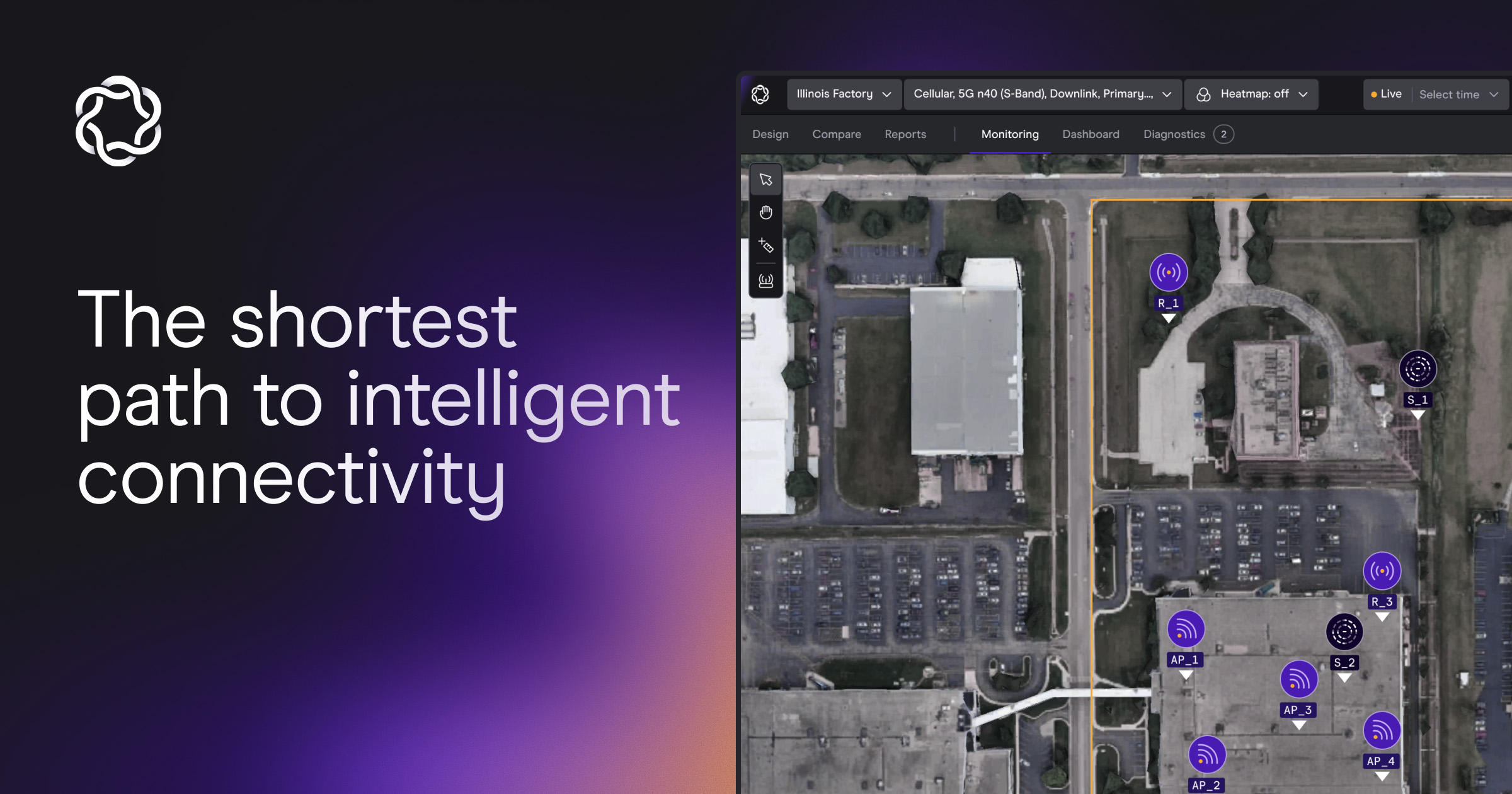
eino is the shortest path to intelligent connectivity, enabling wireless infrastructure that thinks, adapts, and delivers so customers can capture their network’s strategic advantage. With eino’s agentic monitoring and design capabilities, you can build and operate an AI-native foundation that lasts. A network built and monitored using eino provides always-on optimization, setting the new standard for intelligent connectivity.